
WASTEWATER TREATMENT RESOURCES
-

The best reverse osmosis (RO) programs are guided by a defined set of operating principles that provides operators with clear performance standards and a consistent framework for decisions.
-

Faced with aging equipment, a Washington state wastewater plant upgraded its disinfection system. The modern UV retrofit seamlessly installed into old infrastructure, ensuring continuous operation, accommodating future flow expansions, and delivering immediate municipal power savings.
-

Discover how ion exchange technology effectively removes radioactive uranium isotopes from municipal wastewater. This case study explores the transition from pilot studies to full-scale remediation, highlighting the importance of technical support in meeting stringent local water quality standards.
-

Explore how rapid equipment replacement and peristaltic pump technology prevented regulatory violations at a major sanitation district. Learn how high-stakes infrastructure failures were resolved through strategic engineering support to ensure continuous delivery of safe water.
-

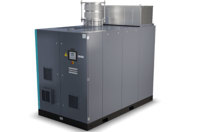
Reliability in aeration is vital for maintaining compliance and reducing emergency costs. By choosing the right blower technology and support system, plants ensure consistent treatment quality, lower energy use, and long-term operational stability.
-
 For the better part of a decade, industrial electricity prices behaved like a slowly shifting floor. From 2016 through 2020, wholesale prices in most major markets were remarkably stable. A plant built in 2018 could reasonably expect its electricity costs to drift, not lurch, through the early 2020s. That baseline is gone.
 -
 As warmer months approach, water management professionals must confront the compounding consequences of biocidal algae treatments.
 -

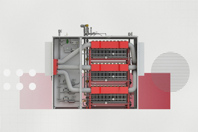
Ozone output doesn’t guarantee performance. Learn how mass transfer efficiency determines how much ozone dissolves, drives treatment results, and impacts energy use and system design.
-
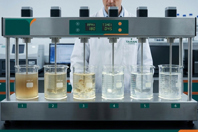
 Polyacrylamide (PAM) selection in industrial wastewater treatment is frequently reduced to a trial-and-error exercise, resulting in reagent waste, inconsistent effluent quality, and inflated operating costs. This article presents a structured framework for PAM optimization across three critical variables — ionic charge density, molecular weight, and coagulant synergy.
 -

Pile cloth media filtration treats wet weather flows in real time, increasing capacity, improving removal efficiency, and helping utilities reduce reliance on limited stormwater storage.







WASTEWATER TREATMENT VIDEOS
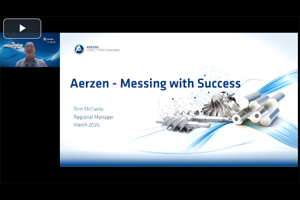
Tom McCurdy from Aerzen discusses the evolution of their highly successful "Delta Hybrid" line — a low-pressure screw compressor package designed for the water and wastewater industry. The presentation details the modern upgrades engineered to elevate the equipment's footprint, versatility, and efficiency.