
DRINKING WATER TREATMENT RESOURCES
-

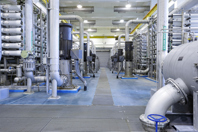
The best reverse osmosis (RO) programs are guided by a defined set of operating principles that provides operators with clear performance standards and a consistent framework for decisions.
-

Evaluating Powdered Activated Carbon through site-specific performance testing allows water utilities to optimize chemical dosing based on real-world efficacy rather than upfront price, preventing costly operational strains and ensuring reliable contaminant removal.
-

When industrial plumes compromise critical aquifers, advanced UV-oxidation processes permanently destroy highly carcinogenic NDMA and resilient 1,4-dioxane, restoring millions of gallons of daily drinking water while reducing facility energy consumption by over eighty percent.
-

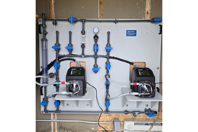
Learn how transitioning to peristaltic metering technology solved chronic priming and maintenance issues during arsenic removal. This overview highlights how specialized pump designs improve chemical dosing reliability, enhance operator safety, and maximize facility space.
-
 Brine valorization plants are the next step in the evolution of desalination technology which opens a new horizon for wider use of desalination as a baseline source of drought-proof and environmentally and fiscally sustainable water supply.
 -
 Expectations for transparency and reliability in water-metering infrastructure have risen. As a result, a fundamental question is emerging across the industry: if modern ultrasonic meters are already smart, why are we still adding intelligence outside the meter?
 -

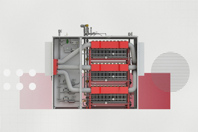
Long-standing myths about GAC reactivation are being increasingly challenged, revealing performance, cost, and sustainability benefits many utilities may have overlooked.
-

Ozone output doesn’t guarantee performance. Learn how mass transfer efficiency determines how much ozone dissolves, drives treatment results, and impacts energy use and system design.



DRINKING WATER TREATMENT VIDEOS
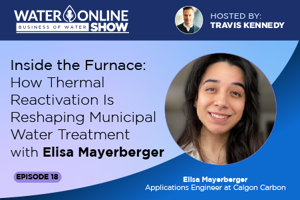
In this episode of the Water Online Show, host Travis Kennedy sits down with Elisa Mayerberger of Calgon Carbon to explore the growing importance of thermal reactivation in water treatment.