DRINKING WATER DISINFECTION RESOURCES
-

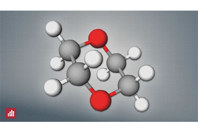
Learn why advanced oxidation processes are critical for treating 1,4-dioxane and how ozone-based systems can improve contaminant destruction and water quality.
-

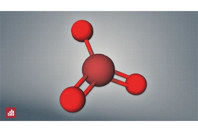
Learn how utilities can control bromate formation, optimize ozone treatment performance, and achieve regulatory compliance through improved monitoring, hydraulics, and system design.
-

Discover how real-time monitoring, automation, and smart controls help modern ozone systems improve treatment performance, efficiency, safety, and operational visibility.
-

When industrial plumes compromise critical aquifers, advanced UV-oxidation processes permanently destroy highly carcinogenic NDMA and resilient 1,4-dioxane, restoring millions of gallons of daily drinking water while reducing facility energy consumption by over eighty percent.
-

Ozone output doesn’t guarantee performance. Learn how mass transfer efficiency determines how much ozone dissolves, drives treatment results, and impacts energy use and system design.
-
 For a long time, it’s been assumed that closed-loop water systems — those commonly found in building heating systems, air-conditioning units, and cooling systems — are at a low risk for Legionella. However, there are many reasons why closed-loop systems can actually inadvertently promote the risk of Legionella.
 -

Emerging state water reuse regulations are driving adoption of ozone and advanced oxidation, requiring flexible, high-performance systems to meet pathogen, trace organic, and DBP control objectives.
-

EPA’s proposed perchlorate regulation challenges utilities to integrate advanced oxidation and separation technologies, enabling reliable removal, regulatory compliance, and flexible treatment for emerging contaminants.
-

Ozone system performance hinges on reactor design, not generator size. Efficient mass transfer, hydraulic integrity, and contact time ensure consistent oxidation, reduced energy use, and reliable treatment results.
-

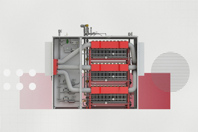
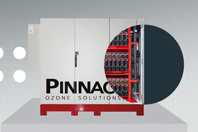
Pinnacle’s QuadBlock ozone system allows water treatment plants to modernize ozone generation modules without replacing cabinets, extending system life, boosting efficiency, and integrating modern controls seamlessly.




DRINKING WATER DISINFECTION VIDEOS